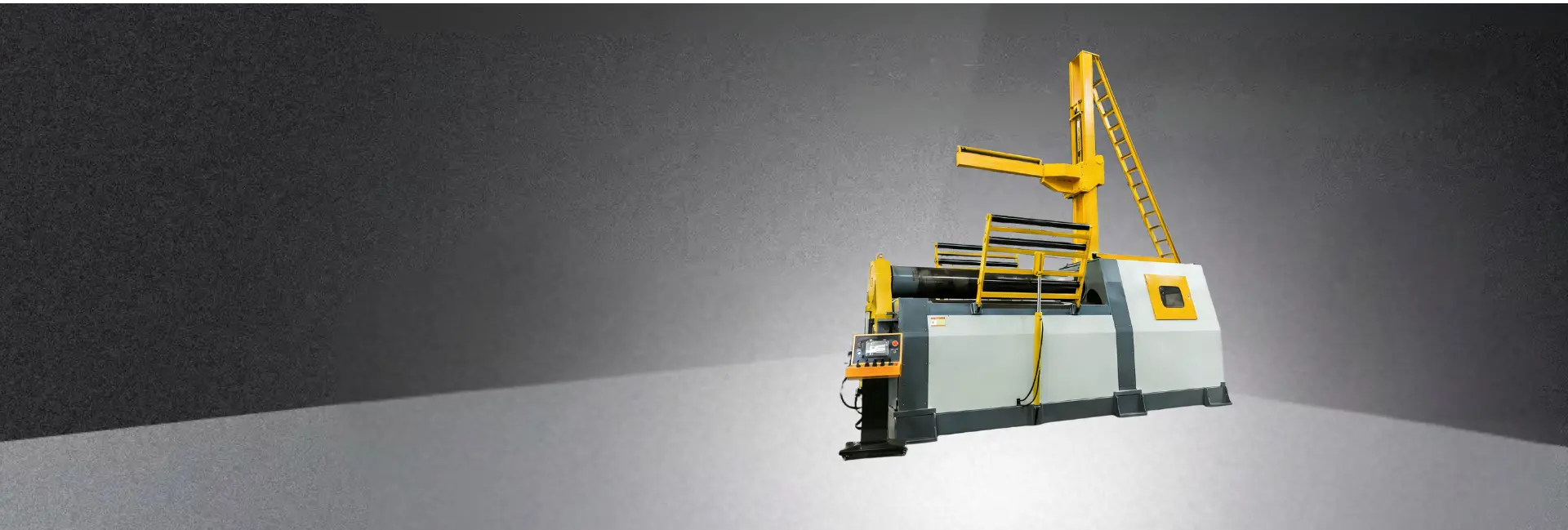
Advanced Plate Rolling & Profile Bending Solutions
Metal plate rolling machines are designed to deform plates into cylinders, cones, and arcs using mechanical or hydraulic systems. RAXMEK roll bending machines are engineered to provide maximum stability, precise pre-bending, and absolute control over curvature radii.
Our standard lineup ranges from symmetrical 3-roller mechanical systems for budget-friendly sheet metal shops to advanced 4-roller CNC hydraulic systems and profile section benders for complex geometries.
Our Plate Rolling & Profile Bending Machinery
Discover our range of advanced roll benders and section forming systems engineered for precise industrial fabrication across diverse profiles.
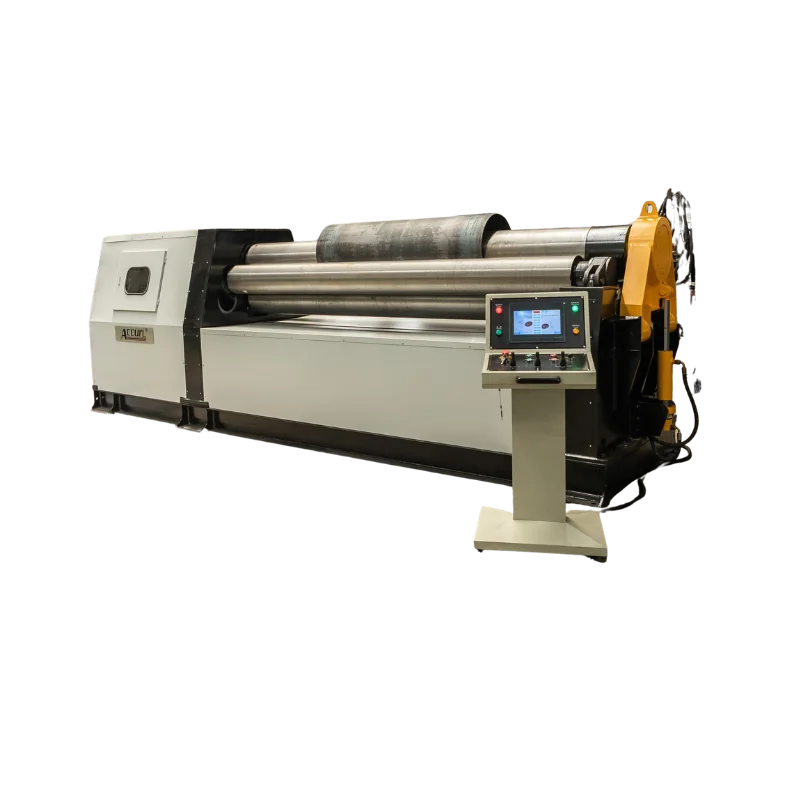
W11 3-Roller Mechanical Plate Rolling Machine (Bending Rolls)
- Structure Type: Symmetrical 3-Roller Pyramid Configuration
- Bending Thickness Capacity: 4 mm – 80 mm (Cold Bending)
- Bending Width Capacity: 1000 mm – 6000 mm
- Roller Material: Forged 42CrMo Alloy Steel (Heat Treated)
- Roller Hardness: HRC 45 - 50 (Induction Hardened)
- Main Drive Motor: Siemens IE3 High-Efficiency Motor
- Electrical Components: Schneider Electric / Siemens
- Control System: Dual-Pedal Mobile Control Console with Emergency Stop
- Yelding Strength Limit: 245 MPa (Standard Mild Steel)
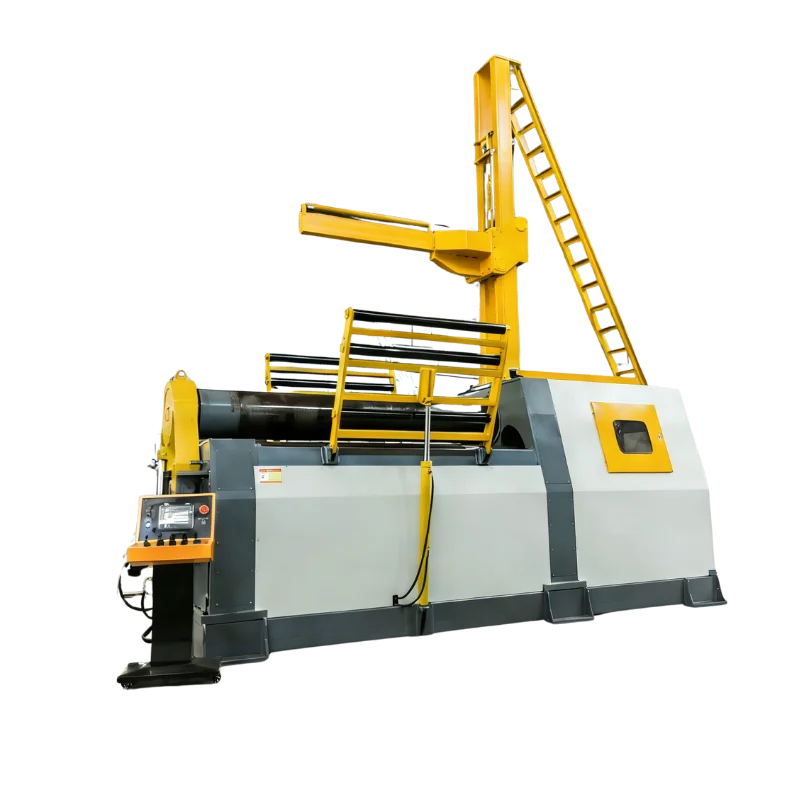
W12 4-Roller CNC Hydraulic Plate Rolling Machine (Bending Rolls)
- Structure Type: CNC Hydraulic 4-Roller Configuration
- Bending Thickness Capacity: 4 mm – 80 mm (Cold Bending)
- Pre-bending Thickness Capacity: 3 mm – 64 mm
- Bending Width Capacity: 1000 mm – 6000 mm
- Roller Material: Forged 42CrMo Alloy Steel (Heat Treated)
- Roller Hardness: HRC 48 - 54 (Induction Hardened)
- Control System: Multi-Axis Graphical CNC (ESA / Beckhoff)
- Drive System: Dual-Hydraulic Motors with Planetary Reducers
- Hydraulic Components: Bosch Rexroth / Vickers
Metal Plate Rolling Machine FAQ
What is a metal plate rolling machine?
A metal plate rolling machine is mainly used to bend metal plates into cylindrical or arc shapes. This machine has a wide range of applications in the metal processing industry, especially in the manufacture of tanks, pressure vessels, pipelines, automotive parts, and other structural fabrications.
What are the main types of plate rolling machines?
The 3-roll plate rolling machine is one of the most common types and is suitable for medium-thick plates (available in symmetrical and asymmetrical initial-clamping types). Symmetrical 3-roll plate rolling machines are usually used for uniform bending, while asymmetrical types are suitable for bending heavy materials. The 4-roll plate rolling machine adds a side roller to pre-bend metal plates, providing higher precision and flexibility. They can also be classified as mechanical or hydraulic types.
What materials can be rolled using metal rolling machines?
Steel is the most common rolled material, suitable for shipbuilding, boilers, and chemical equipment. Other available materials include stainless steel, aluminum, carbon steel, copper, and various high-strength alloy metals.
How does a metal plate rolling machine work?
A metal plate rolling machine usually consists of three or four rollers, which can be fixed or adjustable. In a 3-roll machine, the rollers are arranged in a triangle. As the metal plate passes between them, it is bent by the pressure and friction of the rollers. A 4-roll machine adds a side roller to pre-bend the plate and provide additional support. The pressure can be provided hydraulically or mechanically.
How do you ensure safety while operating a plate rolling machine?
Operators should receive proper training and understand the controls and emergency stops. When in use, operators should wear well-fitting work clothes, safety glasses, protective gloves, steel-toed shoes, and ear protection. Conduct a comprehensive inspection before each use to ensure all parts (especially bearings, rollers, and hydraulics) are in good condition. workpieces should be properly secured and lifting equipment should be used for heavy materials.
What maintenance is required for a metal plate rolling machine?
Keep the machine clean around moving parts and rollers to prevent debris accumulation. Regularly lubricate moving parts including reducers, upper roller lifting guides, and sliding bearings. Check bearings, gears, rollers, and frames regularly. Promptly arrange repairs or part replacements if wear is detected.
What are common issues faced during metal plate rolling machine operation?
1. Uneven plate thickness: caused by material inconsistency or incorrect roller pressure. 2. Plate misalignment: caused by incorrect initial alignment or poorly adjusted rollers. 3. Overloading: causes excessive wear or damage to the rollers. Ensuring that the load capacity of the equipment is not exceeded is critical.
Request a Custom Quote
Have questions about our plate rolling machines or need a customized quote? Send us your requirements and our team will get back to you within 24 hours.
Get in touch, and we'll get back to you as soon as possible. We look forward to hearing from you!