Four-Column vs. Gantry Frame Rigidity – Structural Mechanics in Heavy-Duty Hydraulic Pressing
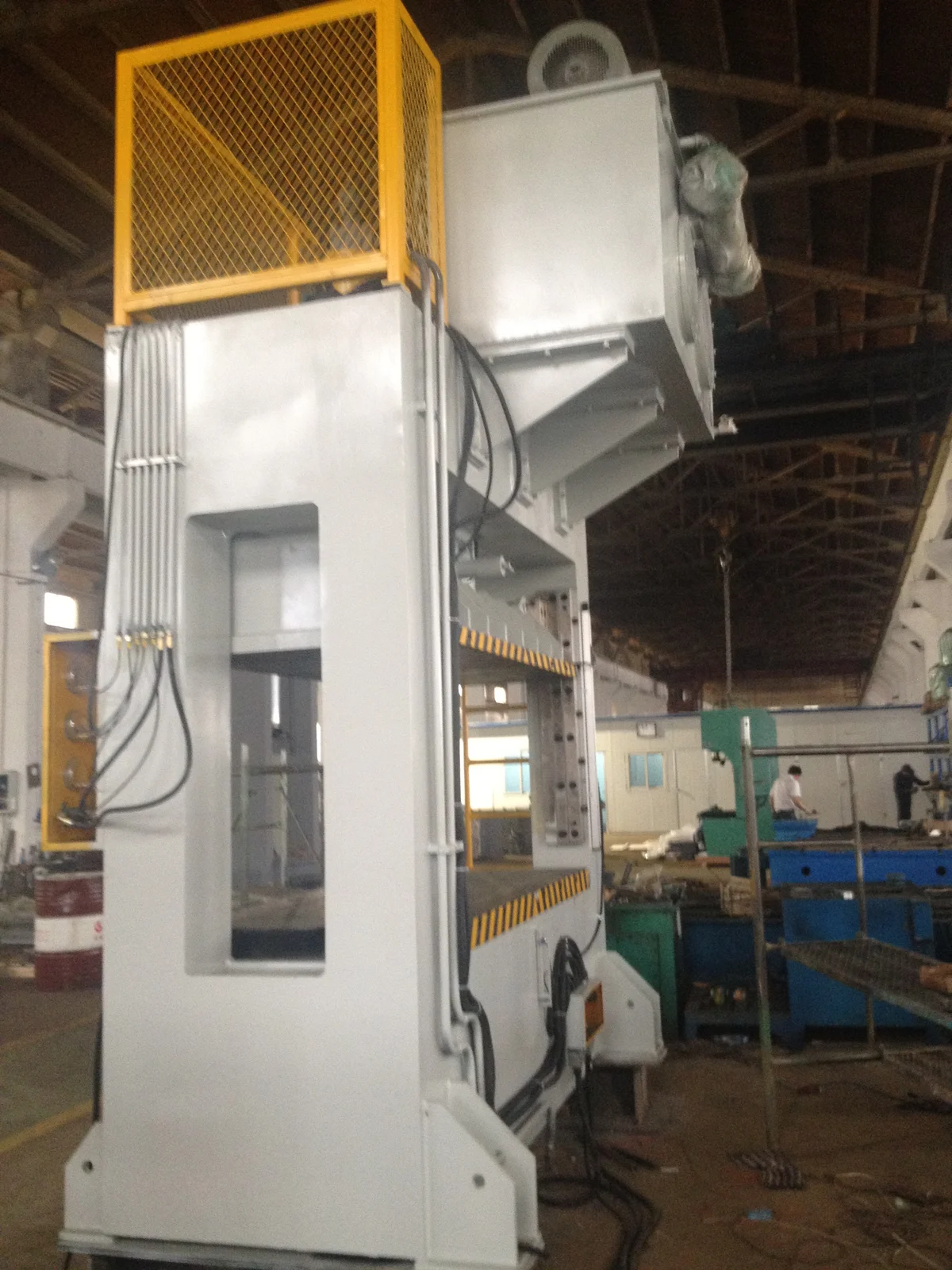
Choosing between a four-column and a gantry hydraulic press depends on the structural forces of your application. This article analyzes frame deflection, load distribution, and tool life.
In heavy-duty metal forming, deep drawing, and powder metallurgy, a hydraulic press machine must deliver hundreds or thousands of tons of force with high precision. Under such extreme loads, the machine frame itself undergoes stress, resulting in deflection.
If the frame deflects too much, the top slide (ram) and the bottom bolster misalign. This misalignment causes uneven part thickness, accelerates tool wear, and can damage high-value dies.
When configuring a hydraulic press, the primary engineering choice is between a four-column frame and a gantry (double-column / H-frame) structure.
Mechanical Comparison of Frame Designs
1. Four-Column Frame Mechanics
Four-column presses use four precision-ground cylindrical steel columns to guide the moving bolster.
- Accessibility: The primary advantage of a four-column design is 360-degree accessibility. Operators and automated feed systems can access the die space from all four sides, making it ideal for integration into complex, automated production lines.
- Load Distribution: Under symmetrical loads, tension is distributed equally among the four columns. However, under off-center loads, the columns experience bending stresses (tilting torque). If the slide guide bushings are not long enough, this can lead to guide wear.
2. Gantry (H-Frame / Double-Column) Mechanics
Gantry-frame presses feature a fully welded steel box structure with two vertical side columns (uprights).
- Maximum Rigidity: The welded H-frame box structure provides superior structural stiffness compared to the column design. It minimizes frame deflection under high-tonnage loads.
- Eight-Fold Guideways: Gantry presses typically use flat, adjustable eight-face guide rails to guide the slide. This system offers much higher resistance to lateral forces and off-center loads than cylindrical column bushings.
Deflection and Alignment Performance
To help engineering managers evaluate both configurations, the table below highlights key performance characteristics under industrial loads:
| Design Parameter | Four-Column Hydraulic Press | Gantry-Frame (H-Frame) Press |
|---|---|---|
| Structural Stiffness | Moderate (subject to column elongation/bending) | Extreme (box-welded frame prevents stretching) |
| Die Space Accessibility | 360° (accessible from front, back, and sides) | 180° (accessible from front and back only) |
| Slide Guidance Type | Cylindrical guide bushings on columns | 8-Face Flat Adjustable Guideways |
| Off-Center Load Resistance | Lower (susceptible to guide wear under tilt) | Very High (guideways absorb off-center torque) |
| Guide Adjustability | Non-adjustable (bushings must be replaced) | Fully adjustable clearance via taper gibs |
| Deep Drawing Suitability | Suitable for uniform parts | Ideal for complex, deep, or asymmetrical draws |
Frame Deflection Analysis
During pressing, frame stretching (deflection) alters the stroke depth. For a hydraulic press with frame height ($L$) and cross-sectional area ($A$), the total elastic stretch ($\delta$) under load ($F$) is calculated using the elastic elongation formula:
δ = (F × L) / (E × A)
δ: Elastic elongation (mm)
F: Applied pressing force (N)
L: Height of tension columns/frame (mm)
A: Combined cross-sectional area (mm²)
Where E represents the Modulus of Elasticity of the steel frame (approximately 210,000 MPa).
Because a box-welded H-frame press can incorporate massive steel plate columns with a much larger cross-sectional area ($A$) than four cylindrical bars, its deflection ($\delta$) under equivalent loads is significantly lower.
Core B2B Application Strategies
1. High-Precision Metal Drawing and Stamping
For deep drawing components (like kitchen sinks, automotive body panels, or gas cylinders), H-frame presses are preferred. The high resistance to lateral movement prevents die shifting as metal flows into the cavity, ensuring uniform wall thickness and reducing scrap rates.
2. Multi-Stage Progressive Tooling
Progressive dies perform multiple operations (cutting, bending, punching) sequentially along a metal strip. Because different operations require different forces, progressive tooling creates off-center loads inside the bed.
An H-frame press with 8-face guideways is engineered to handle these unbalanced loads without tilting, preventing chipping on delicate punches.
3. Open Tool Access Applications
For large, bulky workpieces (like plate straightening, shaft bending, or large-diameter assembly pressing), a four-column press provides the necessary clearance to load parts from the side using overhead cranes or side-entry robots.
Engineering Support and Technical Consultation
At RAXMEK, we engineer our hydraulic press machinery with Finite Element Method (FEM) optimized frames, high-pressure piston pumps, and premium proportional valve controls.
Our engineering team is ready to help you configure the optimal press for your manufacturing needs. We offer:
- FEM Stress Simulation: We analyze your tooling layout and simulate stress distribution on the press frame to recommend the correct tonnage and frame type.
- Custom Cushion Systems: Engineering active hydraulic die cushions with adjustable pressure profiles for complex deep drawing tasks.
- Turnkey Quotations: Complete project specifications, including structural foundation drawings, transport logistics, and maintenance service packages.
Contact RAXMEK today to speak with a technical expert and optimize your metal forming operations.
Recursos Relacionados
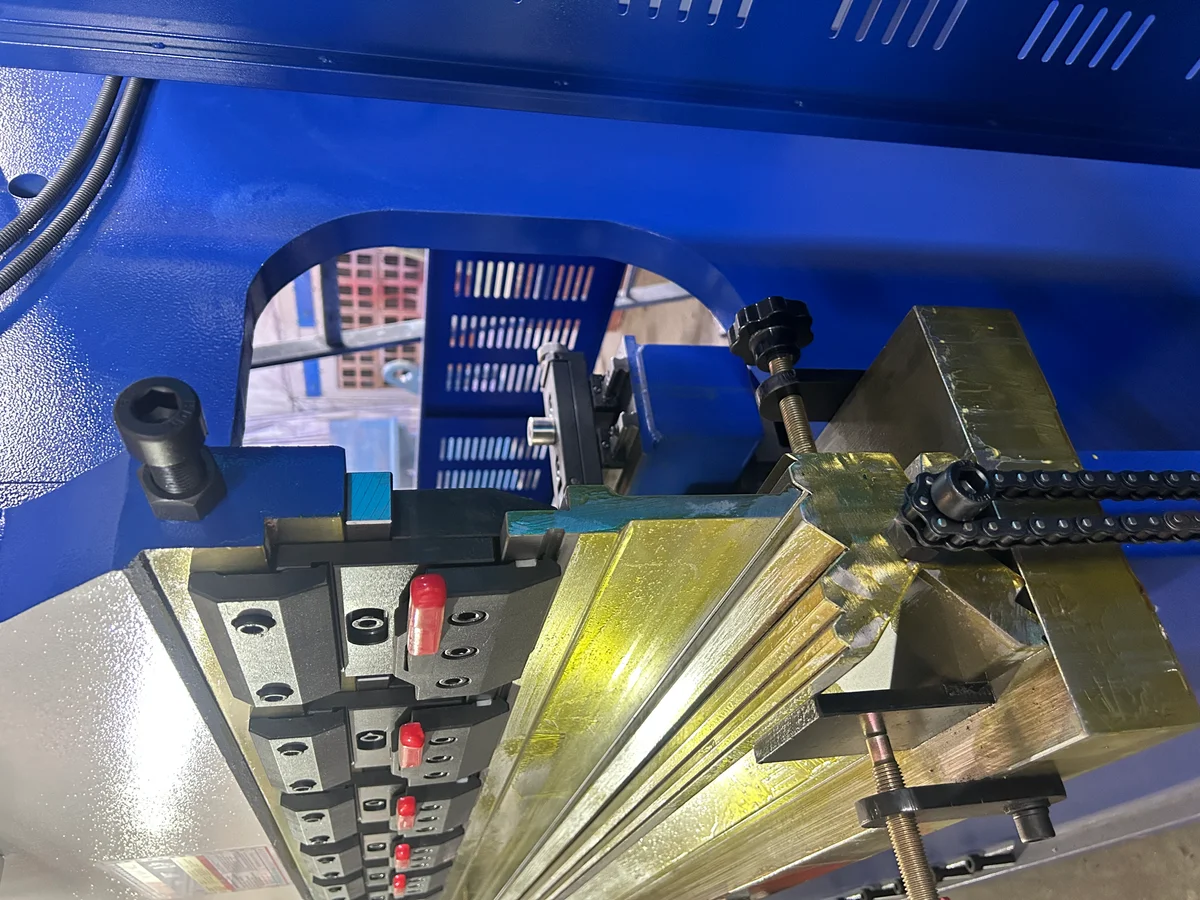
CNC Press Brake Crowning Systems – Hydraulic vs. Mechanical Deflection Compensation for High-Precision Metal Bending
In precision sheet metal bending, frame deflection directly affects angle consistency across the bending length. This article examines the mechanical differences, PID feedback...
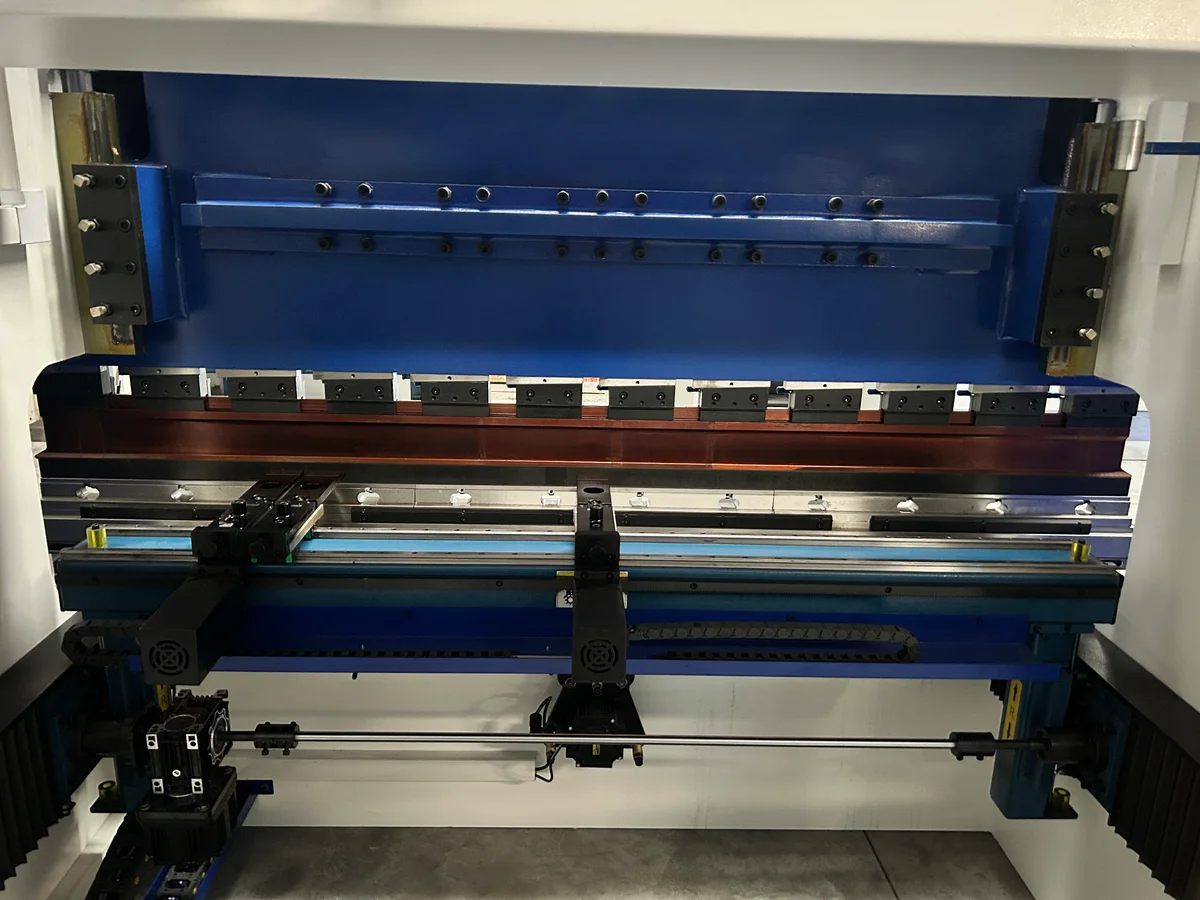
CNC Press Brake Backgauge Systems – Comparing Multi-Axis (X, R, Z1, Z2, X1, X2) Drive Configurations and Their Impact on Bending Accuracy
A deep dive into press brake backgauge axes, drive kinematics, and linear transmission systems. Learn how multi-axis (X, R, Z1, Z2, X1, X2) setups improve production speed...
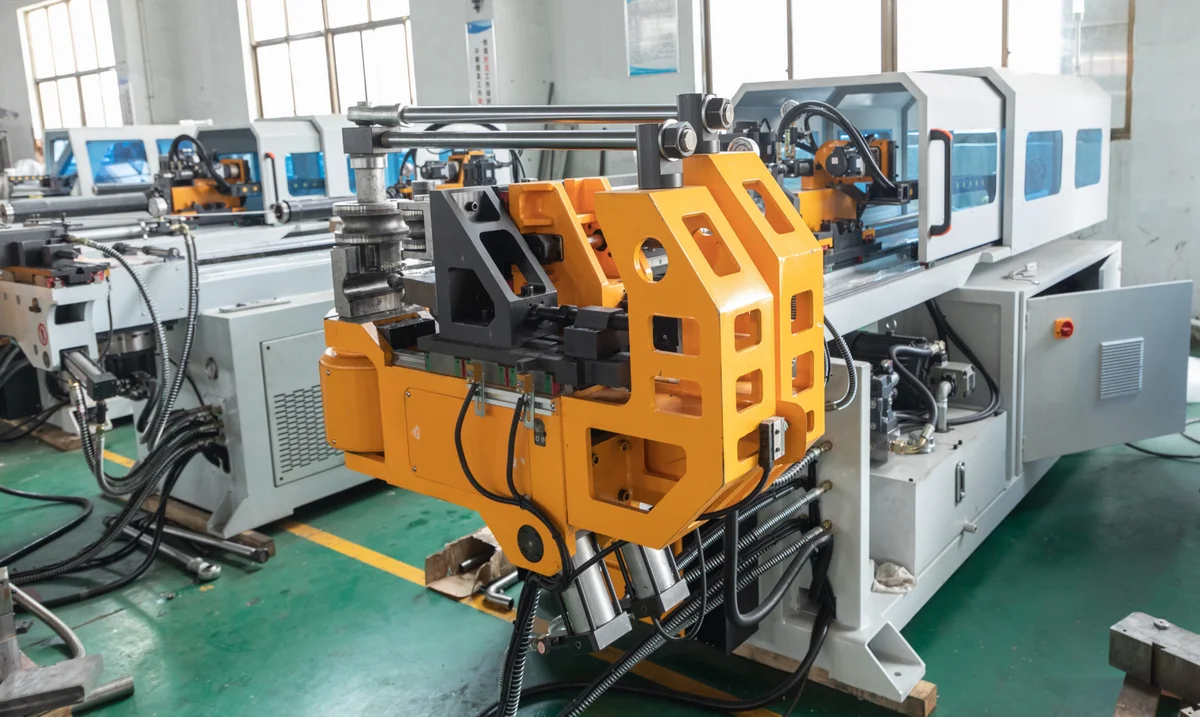
Mandrel Selection and Placement Kinematics – Preventing Wrinkling, Ovality, and Wall Thinning in Thin-Walled Tube Bending
High-quality tube bending requires careful management of internal and external forces. This article explores mandrel types, wiper die settings, and mandrel insertion depth...